Every successful real estate agent knows the truth: most leads are not ready to buy or sell right now. In fact, research suggests that up to 97% of new leads require ongoing follow-up before they convert. That is where real estate lead nurturing comes in. By building thoughtful, strategic communication sequences, you can transform cold sign-in sheet contacts and website inquiries into loyal clients who choose you when the time is right. In this guide, we will walk you through how to build nurturing sequences that actually work, the technology that makes them possible, and the common mistakes that leave money on the table.
Why Real Estate Lead Nurturing Matters More Than Ever
The real estate landscape has shifted dramatically over the past decade. Buyers and sellers now spend weeks, months, or even years researching online before they ever reach out to an agent. According to the National Association of Realtors (NAR), 97% of home buyers used the internet during their home search in 2023. This longer decision-making timeline means that agents who fail to stay in front of leads risk losing them to competitors who do.
Consider the math. If you attend ten open houses a month, run a couple of online ad campaigns, and network actively, you might generate 50 to 100 new leads per month. Without a nurturing system, you might only follow up meaningfully with 10 to 15 of those contacts. The rest? They slip through the cracks and become someone else’s commission check.
Real estate lead nurturing is the systematic process of building relationships with prospects at every stage of the buying or selling journey. Rather than relying on a single phone call or email, you create a sequence of touchpoints that educate, engage, and build trust over time. The agents who master this process consistently outperform their peers in conversion rates, repeat business, and referrals.
Understanding the Lead Nurturing Funnel for Real Estate
Before you can build effective sequences, you need to understand where your leads fall in the nurturing funnel. Not all leads are created equal, and treating a curious open house visitor the same way you treat a pre-approved buyer actively touring homes is a recipe for wasted effort and missed opportunities.
Stage 1: Awareness (Cold Leads)
These are people who have just entered your sphere. They might have signed in at an open house, downloaded a neighborhood guide from your website, or scanned a QR code at a community event. They know you exist, but they have no relationship with you yet. Your goal at this stage is simply to provide value and establish credibility.
Stage 2: Consideration (Warm Leads)
Warm leads have engaged with your content multiple times. They have opened your emails, responded to a text, or visited your website more than once. They are actively thinking about a real estate transaction but have not committed to working with a specific agent. Here, your goal is to differentiate yourself and demonstrate expertise.
Stage 3: Decision (Hot Leads)
Hot leads are ready to act. They have asked for a CMA, requested a showing, or submitted an offer. Your nurturing at this stage is about responsiveness, removing friction, and guiding them confidently through the transaction process.
Stage 4: Post-Transaction (Past Clients)
Many agents neglect this critical stage. Past clients are your most valuable source of referrals and repeat business. A long-term nurturing sequence that keeps you relevant without being intrusive can generate significant revenue over time.
Building Your Lead Nurturing Sequences Step by Step
Now that you understand the funnel, let us walk through the practical process of building sequences that move leads from one stage to the next. The best real estate lead nurturing strategies combine multiple communication channels, provide genuine value, and respect the prospect’s timeline.
Step 1: Define Your Lead Sources
Start by listing every place your leads come from. Common sources include:
- Open house sign-ins
- Website contact forms and landing pages
- Social media direct messages and comments
- Referrals from past clients or partners
- Online advertising campaigns (Google, Facebook, Instagram)
- Networking events and community involvement
- Digital business card exchanges
Each source carries different levels of intent. An open house visitor who took time to tour a home is warmer than someone who casually clicked on a Facebook ad. Your sequences should reflect this distinction.
Step 2: Create Segmented Lists
Segment your contacts based on source, intent level, timeline, and property preferences. At a minimum, create separate sequences for buyers, sellers, investors, and past clients. Within those groups, further segment by urgency (ready now, 3 to 6 months, 6 to 12 months, just exploring).
Step 3: Map Your Touchpoints
A single-channel approach rarely works. The most effective nurturing sequences blend multiple touchpoints:
- Email: The backbone of most nurturing sequences, ideal for delivering market updates, educational content, and property alerts.
- Text/SMS: Great for quick check-ins, event invitations, and time-sensitive updates. Keep messages short and personal.
- Phone calls: Nothing replaces a genuine conversation. Schedule calls at key moments in your sequence, not as your only touchpoint.
- Social media: Engage with leads’ posts, share valuable content, and use retargeting ads to stay visible.
- Direct mail: A handwritten note or market snapshot mailer can cut through digital noise effectively.
Step 4: Develop Your Content Calendar
Plan at least 8 to 12 touchpoints for cold leads over the first 90 days. For long-term nurturing (past the initial sequence), aim for at least two meaningful touches per month. Your content should rotate between educational, personal, and promotional messages, with a heavy emphasis on value rather than sales pitches.
Email Templates and Timing That Convert
Email remains the most scalable channel for real estate lead nurturing. But not all emails perform equally. Here are proven sequence frameworks and timing strategies that top-producing agents use.
The Cold Lead Welcome Sequence (Days 1 to 14)
This is your first impression. The goal is to introduce yourself, deliver immediate value, and set expectations for future communication.
- Email 1 (Day 0, within 5 minutes): Thank them for connecting. Reference where you met or how they found you. Include one helpful resource, such as a neighborhood guide or market snapshot.
- Email 2 (Day 2): Share a brief personal story about why you became a real estate agent. Humanize yourself and build connection.
- Email 3 (Day 5): Provide a valuable piece of market data or insight specific to their area of interest. Position yourself as a local expert.
- Email 4 (Day 9): Share a client success story or testimonial that mirrors their situation. Social proof is incredibly powerful.
- Email 5 (Day 14): Ask a simple question to encourage a reply: “Are you still thinking about exploring homes in [neighborhood]?” The goal is to start a conversation.
The Warm Lead Engagement Sequence (Weeks 3 to 8)
Once a lead has engaged (opened emails, clicked links, replied), transition them to a more targeted sequence:
- Bi-weekly emails with curated property listings matching their criteria
- Monthly market updates with local statistics and trends
- Invitations to upcoming open houses or virtual tours
- Educational content about the buying or selling process
- Periodic check-in calls or personalized video messages
Timing Best Practices
According to research from Inman News, the best times to send real estate emails are Tuesday through Thursday between 9:00 AM and 11:00 AM local time. Response rates drop significantly on weekends and after 5:00 PM on weekdays. However, always test your own audience, as local markets can vary.
Leveraging Technology to Automate Lead Nurturing
Manual follow-up simply does not scale. If you are juggling 50 or more active leads at any given time, you need technology that handles the repetitive work while preserving a personal touch. Here is how the right tools can transform your real estate lead nurturing efforts.
Automated Lead Capture
The nurturing process starts the moment someone enters your ecosystem. If you are still using paper sign-in sheets at open houses, you are already behind. Digital sign-in tools like EntryPointPro capture visitor information instantly and accurately, eliminating the risk of illegible handwriting or lost paperwork. Better yet, they can trigger your first email within minutes of a visitor signing in, capitalizing on the moment when your brand is freshest in their mind.
CRM Integration and Drip Campaigns
Your CRM is the engine of your nurturing machine. Choose one that allows you to build automated drip campaigns based on lead tags and behaviors. Look for features like:
- Automatic lead scoring based on engagement
- Trigger-based emails (e.g., a lead visits your listing page three times)
- Task reminders for manual touchpoints like phone calls
- Integration with your lead capture tools and MLS
Digital Business Cards for Seamless Connection
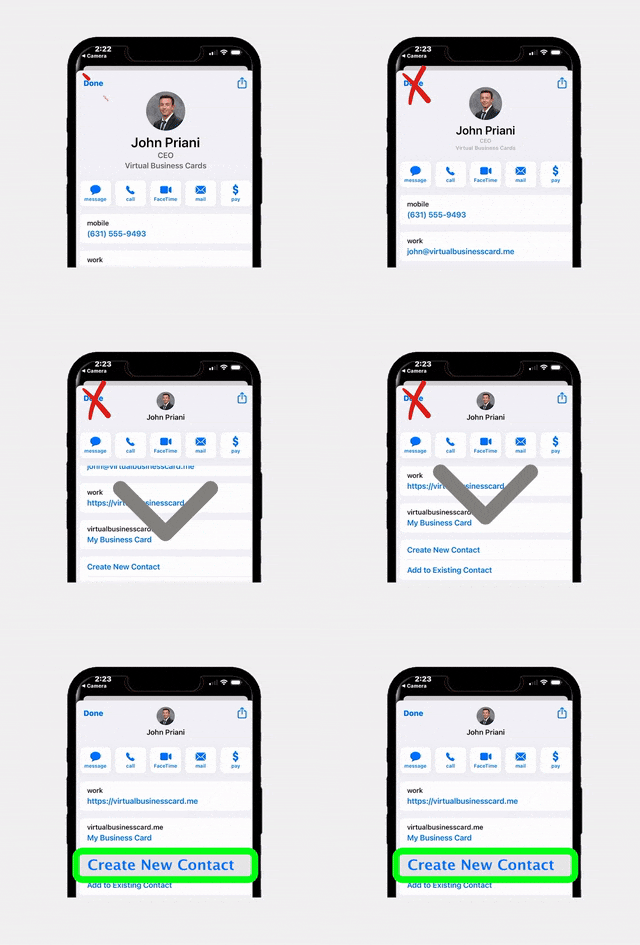
Every networking event, coffee meeting, and chance encounter is a lead nurturing opportunity. RealConnect digital business cards make it effortless to share your contact information and instantly capture the other person’s details. When a new connection taps your card, their information flows directly into your database, ready for your nurturing sequence to kick in.
Streamlined Transaction Management
When leads do convert, your nurturing does not stop. The transaction itself is a nurturing experience. Clunky, disorganized processes erode the trust you worked so hard to build. Tools like RLTRsync’s Offer Management platform keep the offer process smooth and transparent, reinforcing your professionalism and increasing the likelihood of referrals and repeat business after closing.
Common Lead Nurturing Mistakes Agents Make
Even well-intentioned agents can sabotage their nurturing efforts with avoidable mistakes. Here are the most common pitfalls and how to avoid them.
Mistake 1: Following Up Once and Giving Up
The average real estate lead requires 8 to 12 touchpoints before converting. Yet most agents give up after one or two attempts. If your follow-up strategy consists of one phone call and one email, you are leaving the vast majority of your potential revenue on the table.
Mistake 2: Being Too Salesy Too Soon
Nobody wants to receive a “Ready to buy a home?” email from someone they met five minutes ago at an open house. Early-stage nurturing should focus on providing value, building rapport, and establishing expertise. The sales conversation should happen naturally once trust is established.
Mistake 3: Ignoring Lead Segmentation
Sending a first-time buyer the same content you send to a seasoned investor makes your communication feel generic and irrelevant. Take the time to segment your database and tailor your messaging to each group’s specific needs and concerns.
Mistake 4: Neglecting Past Clients
Your past clients already know, like, and trust you. A simple quarterly check-in, annual home anniversary message, or local market update can keep you top-of-mind for referrals and future transactions. The cost of nurturing a past client is a fraction of acquiring a new lead.
Mistake 5: Relying Solely on Email
Email is essential, but it is not enough on its own. The most effective real estate lead nurturing strategies combine email with phone calls, text messages, social media engagement, and even in-person interactions. Multi-channel nurturing consistently outperforms single-channel approaches.
Measuring and Optimizing Your Nurturing Results
You cannot improve what you do not measure. Tracking the right metrics allows you to identify what is working, what needs adjustment, and where you are losing leads in the funnel.
Key Metrics to Track
- Open rate: The percentage of recipients who open your emails. Aim for 25% or higher. Low open rates suggest your subject lines need work or your emails are landing in spam.
- Click-through rate (CTR): The percentage of openers who click a link in your email. A healthy CTR for real estate emails is 3% to 5%.
- Reply rate: How many leads respond to your messages? Replies indicate genuine engagement and signal that a lead is moving down the funnel.
- Conversion rate: The percentage of nurtured leads who become clients. Track this by lead source to understand which channels deliver the best ROI.
- Time to conversion: How long does it take from first contact to signed agreement? Understanding this helps you set realistic expectations and budget your marketing spend.
- Unsubscribe rate: A sudden spike in unsubscribes indicates your content is missing the mark or your frequency is too high.
A/B Testing Your Sequences
Never assume your first draft is your best. Test different subject lines, send times, email lengths, and calls to action. Even small improvements, like a 2% increase in open rates, compound dramatically across hundreds or thousands of leads over time.
Regular Sequence Audits
Set a calendar reminder to review your nurturing sequences every quarter. Look for emails with consistently low engagement and replace them. Update market statistics and property references so your content stays current. Remove leads who have been unresponsive for 12 months or more to keep your database clean and your deliverability high.
Consider also reviewing your lead capture methods regularly. If your open house sign-in process is creating friction or losing data, you might be undermining your nurturing efforts before they even begin. A streamlined digital system ensures accurate contact information flows directly into your sequences without delay.
The Long Game Pays Off
Real estate lead nurturing is not a quick fix. It is a long-term investment that pays dividends over months and years. According to HousingWire, agents who implement consistent nurturing systems see an average increase of 20% to 30% in annual closings compared to those who rely solely on new lead generation. The compounding effect of staying in touch with hundreds of contacts over time creates a pipeline that sustains your business through any market condition.
Frequently Asked Questions
How long should a real estate lead nurturing sequence last?
Your initial intensive sequence should span 60 to 90 days, with 8 to 12 touchpoints across multiple channels. After that, transition leads into a long-term nurturing track with at least two meaningful touches per month. For past clients, maintain a quarterly or monthly cadence indefinitely. The key is to never let a lead go completely cold without a deliberate decision to archive them.
What is the best way to capture leads for nurturing at open houses?
Digital sign-in tools are far superior to paper sheets. They capture accurate contact information, often including email and phone number, and can trigger automated follow-up within minutes. Platforms like EntryPointPro offer QR code check-in and automatic document processing, making the entire experience seamless for both the agent and the visitor.
How many touchpoints does it take to convert a real estate lead?
Industry data suggests that the average real estate lead requires 8 to 12 touchpoints before converting into a client. Some leads will convert faster, especially referrals and highly motivated buyers, while others may take a year or more. The important thing is to remain consistent and provide value at every touchpoint rather than pushing for a premature commitment.
Should I use text messages in my lead nurturing sequences?
Yes, text messages can be highly effective when used appropriately. They boast open rates above 90%, making them ideal for time-sensitive messages, quick check-ins, and event invitations. However, always obtain consent before texting, keep messages brief and personal, and avoid sending texts too frequently. A good rule of thumb is no more than two to three texts per month for warm leads.
What is the biggest mistake agents make with lead nurturing?
The single biggest mistake is giving up too soon. Most agents follow up once or twice and then move on to the next shiny new lead. Meanwhile, the leads they abandoned end up working with an agent who simply stayed in touch longer. Building a systematic, automated nurturing process ensures that no lead falls through the cracks, regardless of how busy you get.
Start Capturing and Nurturing Leads More Effectively
From digital open house sign-ins to seamless offer management, RLTRsync gives you the tools to capture every lead and nurture them from first contact to closing day. See how our platform fits your business.






 Icon On The Top Right Is the Menu For Your Card. This Is Where You can edit your card and log into your dashboard.