You hosted a great open house, collected a stack of sign-in information, and now you are staring at your phone wondering what to say. Following up with open house leads is one of the most important steps in converting visitors into clients, yet most agents either wait too long, send generic messages, or rely solely on email. In this guide, you will find five battle-tested text message templates designed to spark real conversations, along with the timing strategies and personalization tips that make them work.
Why Texting Outperforms Email for Open House Follow-Ups
If email is your go-to channel for reaching open house visitors, you may be leaving deals on the table. According to the National Association of Realtors, the average American checks their phone more than 140 times per day, and text messages enjoy an open rate above 90 percent. Compare that with the roughly 20 percent open rate most real estate emails receive, and the math becomes clear.
Text messages also feel more personal. When a prospective buyer sees a text from you, it lands in the same app where they chat with friends and family. That familiarity lowers the barrier to responding. Here are several reasons texting works so well for open house lead follow-up:
- Speed of delivery: A text arrives in seconds and is typically read within three minutes.
- Brevity encourages action: Short messages are easier to process than long emails, making a quick reply feel effortless.
- Two-way conversation: Texting naturally invites a back-and-forth dialogue instead of a one-sided pitch.
- Higher perceived urgency: People treat texts as more time-sensitive than emails, which increases response rates.
The Timing Strategy That Gets More Replies
Even the perfect message will fall flat if it arrives at the wrong time. Timing is arguably as important as the words you choose. Here is a framework that top-producing agents use to sequence their text follow-ups after an open house.
Same-Day Follow-Up (Within 2 Hours)
The first text should go out while the open house experience is still fresh in the visitor’s mind. Ideally, send it within one to two hours of the event ending. At this point, the visitor can still picture the kitchen countertops and the backyard. Your message feels like a natural continuation of the conversation you started in person.
Next-Day Nudge (12 to 24 Hours Later)
If you did not hear back, a brief next-day message keeps you on their radar without feeling pushy. This is a great window to share a resource, such as a comparable sales list or a neighborhood guide, that adds genuine value.
The Week-Two Re-Engagement (7 to 14 Days Later)
Leads who did not respond to the first two messages are not necessarily cold. Life gets busy. A well-timed re-engagement text that offers something new, like a just-listed property or a market update, can reignite interest.
5 Text Message Templates That Actually Work
Below are five text message templates you can copy, customize, and start using today. Each one is designed for a specific point in the follow-up timeline and a specific goal. Remember that the best texts feel human, not automated. Read each message out loud before sending to make sure it sounds like something you would actually say.
Template 1: The Same-Day Personal Touch
This template is meant to be sent within two hours of the open house. Its goal is to create a warm connection and open the door to further conversation.
Template:
“Hi [First Name], it was great meeting you at the open house on [Street Name] today! I noticed you seemed interested in [specific feature, e.g., the finished basement]. If you have any questions about the property or the neighborhood, I am happy to help. – [Your Name]”
Why it works: This message references a specific detail from your in-person interaction. That personal touch proves you are paying attention and immediately separates you from every other agent sending cookie-cutter messages. According to research from Inman News, personalized outreach increases response rates by as much as 50 percent compared to generic follow-ups.
Template 2: The Value-Add Resource
Send this one 12 to 24 hours after the open house. Its purpose is to provide real value and position you as a knowledgeable local expert.
Template:
“Hey [First Name], I put together a quick list of recent sales in the [Neighborhood Name] area so you can see how homes are pricing right now. Want me to send it over? No pressure at all. – [Your Name]”
Why it works: Instead of asking the lead to do something, you are offering to give them something. This flips the dynamic and makes the prospect feel like responding is in their best interest. Agents who lead with value consistently convert more open house leads into active clients.
Template 3: The Property Match
Use this template when you know of another listing that matches what the visitor seemed to be looking for. It works well as a day-two or day-three follow-up.
Template:
“Hi [First Name], after our conversation at the open house, I thought of another property you might love. It is a [beds/baths] in [Neighborhood] at [price point]. Would you like me to send you the details or set up a quick showing? – [Your Name]”
Why it works: This message demonstrates that you listened and took action on their behalf. It also introduces a low-commitment next step, which is simply receiving more information. Once they say yes, you have an active dialogue.
Template 4: The Market Insight Text
This is your week-two re-engagement message. It works especially well in competitive or shifting markets where buyers crave data.
Template:
“Hey [First Name], quick market update for [Neighborhood/City]: [specific stat, e.g., average days on market dropped to 12 this month]. If buying is still on your radar, I would love to chat about how to position yourself. No strings attached! – [Your Name]”
Why it works: Leading with a timely, relevant data point shows expertise and creates urgency without being aggressive. It also gives the lead a natural reason to re-engage even if they were not ready the first time.
Template 5: The Exclusive Invitation
Use this template to invite a past open house lead to a future event, such as another open house, a buyer seminar, or a broker’s tour preview.
Template:
“Hi [First Name], I have an exclusive preview of a new listing in [Neighborhood] this [Day] before it goes live on the MLS. Based on what you told me you were looking for, I think this could be a great fit. Want me to save you a spot? – [Your Name]”
Why it works: The word “exclusive” triggers curiosity and a sense of scarcity. By referencing the lead’s past preferences, you reinforce the personal relationship. This template is also excellent for warming up leads you have not heard from in a few weeks.
How to Personalize Templates for Your Market
Templates are starting points, not scripts to follow word for word. The agents who get the best results are the ones who adjust their messaging based on their local market, the type of open house, and the individual lead. Here is how to make each template your own.
Reference Local Landmarks and Details
Generic messages feel robotic. Swap in neighborhood-specific details like nearby schools, a popular coffee shop, or an upcoming community event. This shows the recipient that you genuinely know the area.
Adjust Your Tone for the Price Point
A first-time buyer shopping in the low $200s probably appreciates a friendly, encouraging tone. A move-up buyer looking at luxury properties may respond better to polished, concise communication. Match your language to your audience.
Use Details from the Sign-In Process
If your open house sign-in captures information like the visitor’s timeline, pre-approval status, or property preferences, weave those details into your texts. For example, if someone indicated they need to move within 60 days, referencing that urgency shows you are paying attention. Modern digital sign-in tools like EntryPointPro capture this information automatically, giving you rich data to personalize every follow-up message.
Segment Your Leads
Not every open house visitor is at the same stage. Some are serious buyers, some are curious neighbors, and some are just starting their search. Group your leads into categories and tailor your template accordingly. A curious neighbor might appreciate a “let me know if you ever want a market analysis of your home” message, while an active buyer deserves a more assertive approach.
Common Mistakes That Kill Your Response Rate
Knowing what to do is only half the equation. Avoiding the most common texting mistakes is equally critical. Here are the pitfalls that cause open house leads to ignore your messages or, worse, block your number.
Sending a Novel Instead of a Text
Text messages should be short. Aim for 2 to 4 sentences. If your message requires scrolling, it belongs in an email. Long texts feel overwhelming and rarely get read in full.
Leading with a Sales Pitch
Starting your text with “Are you ready to make an offer?” or “I can get you pre-approved today!” puts pressure on the recipient before you have built any rapport. Lead with value, curiosity, or a personal connection instead.
Using All Caps or Excessive Punctuation
Messages littered with exclamation marks or capitalized words look spammy. One exclamation point per message is plenty. Let your words convey enthusiasm rather than your formatting.
Forgetting to Identify Yourself
The lead may not have saved your number. Always include your first name at the end of the message and, in your first text, reference where you met. Otherwise, your carefully crafted message might get dismissed as a wrong number.
Not Following Up More Than Once
Research from the NAR Real Estate in a Digital Age report shows that the majority of agent-lead connections happen after the second or third touch. Sending just one text and giving up leaves an enormous amount of potential business on the table.
Tools to Streamline Your Open House Lead Follow-Up
Manually copying names from a paper sign-in sheet and typing out individual texts is not a scalable strategy, especially if you are hosting multiple open houses per month. The right technology stack makes your follow-up faster, more consistent, and more personalized.
Digital Sign-In Platforms
Paper sign-in sheets are the enemy of good follow-up. Illegible handwriting, missing phone numbers, and lost pages mean leads slip through the cracks before you even have a chance to text them. A digital open house sign-in platform like EntryPointPro captures clean, accurate contact information and even gathers visitor preferences and consent in real time. With all of your open house leads organized digitally, you can begin follow-up within minutes of the event ending.
CRM Integration
Your sign-in tool should feed leads directly into your CRM so you can tag, segment, and track each contact through your follow-up sequence. Avoid any workflow that requires you to manually re-enter data, as every extra step creates an opportunity for leads to be forgotten.
Digital Business Cards
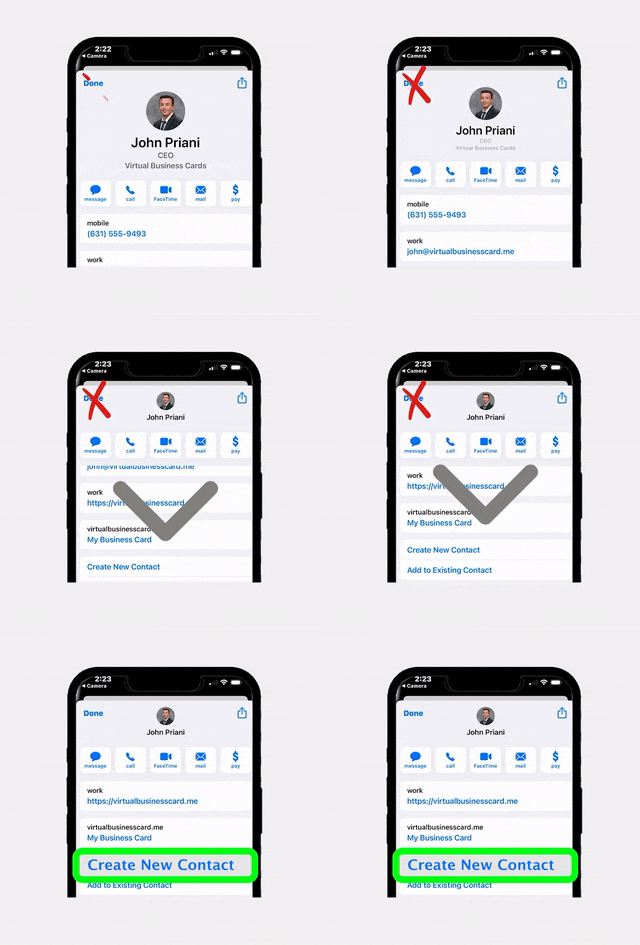
When you meet someone at an open house, you want them to have your contact information saved on their phone before they walk out the door. A digital business card from RealConnect lets visitors tap or scan to instantly save your name, number, and email. When your follow-up text arrives later that day, they already know exactly who you are.
Text Automation with a Human Touch
Some CRM platforms allow you to schedule text messages in advance. You can pre-write your follow-up sequence using the templates above and have them sent automatically at the right intervals. Just be sure to review each batch before it goes out. Automation saves time, but authenticity builds relationships.
Putting Your Follow-Up System Together
Having great templates is just one piece of the puzzle. To consistently convert open house leads into clients, you need a repeatable system that you can execute after every single event. Here is a simple framework to tie everything together.
- Before the open house: Set up a digital sign-in system that captures names, phone numbers, email addresses, buying timelines, and text consent. Prepare your five follow-up templates and customize them for the specific property and neighborhood.
- During the open house: Greet every visitor, take mental notes on their interests and questions, and make sure each person signs in digitally. Hand out or share your digital business card so they have your contact info saved immediately.
- Within 2 hours after: Send Template 1 (The Same-Day Personal Touch) to every visitor. Personalize each message with a specific detail from your conversation.
- The next day: Follow up with Template 2 (The Value-Add Resource) for anyone who did not respond. For leads who did respond, continue the conversation naturally.
- Days 2 to 5: Use Template 3 (The Property Match) for leads who expressed interest in specific home features or neighborhoods.
- Days 7 to 14: Deploy Template 4 (The Market Insight Text) to re-engage leads who have gone quiet.
- Ongoing: Use Template 5 (The Exclusive Invitation) whenever you have a new listing or event that matches a past visitor’s criteria.
This system takes about 30 minutes of dedicated follow-up time per open house, but the return on that investment can be measured in closed transactions. According to HousingWire, agents who follow up with leads within the first hour are seven times more likely to have a meaningful conversation than those who wait even 24 hours.
Frequently Asked Questions
How soon after an open house should I text a lead?
Ideally, within one to two hours of the open house ending. The experience is still fresh in the visitor’s mind, and a prompt text shows professionalism and genuine interest. Waiting even 24 hours can significantly reduce your response rate.
Is it legal to text open house leads?
Yes, as long as the visitor has provided their phone number and consented to receive text messages from you. The Telephone Consumer Protection Act (TCPA) requires prior express consent before sending marketing texts. Using a digital sign-in platform that includes a consent checkbox helps you stay compliant and protects your business.
How many follow-up texts should I send before giving up?
Most successful agents send at least three to five follow-up messages spaced out over two weeks. Research consistently shows that the majority of conversions happen after the second or third contact. If a lead has not responded after five well-spaced messages, move them to a long-term nurture list rather than deleting them entirely.
Should I text or call open house leads?
Starting with a text is generally more effective because it is less intrusive and gives the lead time to respond on their schedule. If a lead replies and shows strong interest, transitioning to a phone call is a natural next step. Many agents find that a text-first approach warms up the lead and makes the eventual phone conversation more productive.
What is the best way to collect phone numbers at an open house?
A digital sign-in platform is the most reliable method. Paper sheets often result in illegible numbers or incomplete information. Digital tools validate entries in real time, capture consent automatically, and organize your leads so you can start follow-up immediately after the event ends.
Capture Every Open House Lead and Follow Up Faster
EntryPointPro gives you a seamless digital sign-in experience with verified contact info, automatic consent capture, and instant lead access so you can send your first follow-up text before visitors even get home.




 Icon On The Top Right Is the Menu For Your Card. This Is Where You can edit your card and log into your dashboard.