Your real estate business card is often the very first impression a potential client or referral partner has of your brand. In a crowded room full of agents, investors, and industry professionals, the card you hand over can either spark a meaningful conversation or end up forgotten in someone’s pocket. Whether you rely on a traditional printed card, a modern digital version, or a combination of both, understanding what to include on your business card is the difference between blending in and standing out at your next networking event.
Why Business Cards Still Matter in 2025
In an era of social media profiles, email signatures, and virtual meetings, you might wonder whether a business card is even worth carrying anymore. The answer is a resounding yes. According to the National Association of Realtors, relationship building and personal connections remain the top sources of new business for real estate agents. Networking events, open houses, community gatherings, and even casual encounters at coffee shops are all opportunities to make a memorable first impression.
A well-designed real estate business card serves as a tangible reminder of who you are and what you do. It bridges the gap between a brief conversation and a follow-up phone call. Research consistently shows that exchanging a physical or digital card increases the likelihood of a follow-up interaction by a significant margin compared to simply saying “find me on social media.”
The challenge is that most agents carry cards that look nearly identical to everyone else’s. A name, a phone number, a brokerage logo, and maybe a headshot. That formula worked a decade ago, but today’s networking events demand more creativity and intentionality. Let’s explore the seven elements that will make your card truly stand out.
1. Essential Contact Information Done Right
This sounds obvious, but you would be surprised how many agents get it wrong. Your card should include the basics, but the key is in the hierarchy and formatting. Cluttered cards with too many phone numbers, fax lines, and three different email addresses overwhelm the reader and dilute the impact.
Here is what to include and how to prioritize it:
- Full legal name as it appears on your license
- Primary phone number with the best way to reach you noted (cell, text, or office)
- Professional email address that uses your brokerage domain, not a free provider like Gmail or Yahoo
- Brokerage name and logo as required by your state’s real estate commission
- License number if your state mandates it on marketing materials
- Website URL that directs people to your personal agent page or IDX site
Formatting matters too. Your name should be the largest text element besides your brokerage logo. Contact details should be easy to read at a glance. Avoid fonts smaller than 8 points, and make sure there is adequate spacing between each line of information.
2. A Professional Headshot
Real estate is a relationship-driven business. People want to work with someone they recognize and trust. Including a professional headshot on your real estate business card helps recipients immediately connect your face with your name after meeting you at a busy event.
A quality headshot does several things:
- Builds instant recognition. After networking events with dozens of agents, a photo helps people remember exactly who you are.
- Establishes professionalism. A polished, well-lit headshot signals that you take your career seriously.
- Creates personal connection. People are wired to respond to faces. A warm, approachable photo makes your card feel more personal than a text-only design.
Invest in a professional photographer who specializes in headshots or personal branding photography. Avoid using selfies, vacation photos, or images that are more than two years old. Your headshot should accurately represent how you look today so there is no disconnect when someone meets you in person.
Headshot Best Practices for Business Cards
Keep the background simple and uncluttered. Wear professional attire that aligns with your brand. Smile naturally. And make sure the image resolution is high enough for print, typically 300 DPI or higher.
3. A QR Code That Links to Your Digital Presence
QR codes have made a massive comeback, and for good reason. A small QR code on the back of your card can instantly connect someone to your online ecosystem. Instead of hoping a prospect manually types your website URL into their browser, they simply scan the code with their phone camera and land exactly where you want them.
Here are some strategic destinations for your QR code:
- Your personal website or agent bio page
- A landing page with your current listings
- Your RealConnect digital business card that contains all your contact details, social profiles, and links in one place
- A scheduling tool like Calendly where prospects can book a consultation
- A video introduction where you welcome new connections and share what you offer
The beauty of linking your QR code to a digital business card platform is that you can update your information at any time without reprinting physical cards. If you change brokerages, update your phone number, or add new social media profiles, the QR code still works because it points to a living, dynamic page.
4. Credentials, Designations, and Social Proof
One of the fastest ways to differentiate yourself at a networking event is by showcasing your professional credentials. If you have earned designations from the National Association of Realtors or other recognized organizations, your real estate business card is the perfect place to display them.
Common designations worth including:
- CRS (Certified Residential Specialist)
- ABR (Accredited Buyer’s Representative)
- GRI (Graduate, REALTOR Institute)
- SRES (Seniors Real Estate Specialist)
- SFR (Short Sales and Foreclosure Resource)
These designations communicate expertise and specialization. They tell the person holding your card that you have invested time and effort into mastering a particular area of real estate. According to NAR’s designation and certification programs, agents with professional designations often command higher earning potential and greater client trust.
Beyond formal designations, consider including a brief social proof element. This could be a line like “Top 1% of agents in [city]” or “500+ homes sold.” Keep it concise and verifiable. One powerful line of social proof can make your card significantly more compelling than a card that lists nothing but basic contact information.
5. A Clear Value Proposition or Tagline
Most business cards tell people what you do: “Real Estate Agent” or “REALTOR.” Very few cards communicate why someone should choose you. This is where a value proposition or tagline becomes a powerful differentiator.
Your value proposition should answer one simple question: What makes you different from every other agent at this event?
Here are some examples of effective taglines for real estate cards:
- “Helping first-time buyers navigate [city] with confidence”
- “Luxury waterfront specialists since 2010”
- “Your neighborhood expert in [specific area]”
- “Making relocation stress-free for military families”
- “Data-driven strategies for maximum home value”
The best taglines are specific, benefit-oriented, and memorable. Avoid generic phrases like “Your dream home awaits” or “Buying, selling, and investing.” These say nothing about who you are or what unique value you bring to the table.
Place your tagline prominently on the card, typically just below your name or on the reverse side where it has room to breathe. It should be one of the first things someone reads after your name.
6. A Specific Call to Action
A surprising number of real estate business cards lack a clear next step. After someone reads your name, sees your photo, and notes your credentials, what do you want them to do? A call to action (CTA) tells the recipient exactly what to do next and increases the chances of converting a casual contact into a real conversation.
Effective CTAs for real estate business cards include:
- “Scan the QR code for a free home valuation”
- “Text HOME to [your number] for my latest listings”
- “Visit [yourwebsite.com] for neighborhood market reports”
- “Schedule a free buyer consultation at [scheduling link]”
- “Follow me on Instagram for daily market insights”
The CTA should be specific and action-oriented. It gives your card a purpose beyond simply sharing contact information. It transforms a static piece of cardstock into an active marketing tool that drives engagement even after the networking event ends.
7. Digital Business Card Integration
The final element that will set your real estate business card apart is bridging the gap between physical and digital. Traditional paper cards get lost, damaged, or tossed in a drawer and forgotten. A digital business card lives on someone’s phone, always accessible and always up to date.
Platforms like RealConnect by RLTRsync are designed specifically for real estate professionals who want to make a lasting impression. With a digital business card, you can share your complete professional profile with a single tap or scan. Your contact information, social media links, current listings, testimonials, and even a video introduction can all live in one place.
Here is why digital integration matters at networking events:
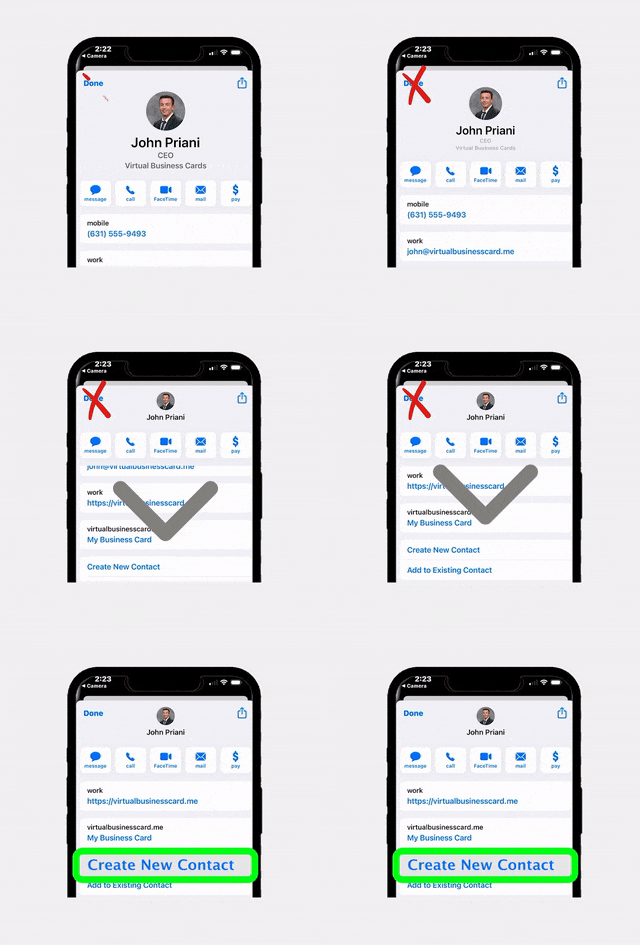
- Instant contact saving. Recipients can save your information directly to their phone’s contact list with one tap, eliminating the need to manually type in your details later.
- Always current. Update your phone number, email, headshot, or brokerage without reprinting cards.
- Analytics and tracking. See who viewed your card, when they viewed it, and which links they clicked, giving you valuable follow-up intelligence.
- Environmentally friendly. Reduce paper waste while still making a professional impression.
- Unlimited sharing. You never run out of digital cards. Share them via text, email, AirDrop, or QR code at any time.
The most effective approach is a hybrid strategy. Carry a sleek physical card that includes a QR code linking to your digital card. This way, you satisfy people who prefer tangible cards and those who prefer digital convenience. You cover both bases and maximize the chances that your contact information actually gets saved and used.
Design Tips That Tie It All Together
Including the right information is only half the battle. How that information is presented determines whether your card gets a second look or ends up in the recycling bin. Here are design principles that help your real estate business card make a visual impact.
Choose a Consistent Color Palette
Your card’s colors should align with your personal brand and brokerage guidelines. Stick to two or three colors maximum. High contrast between text and background ensures readability. If your brokerage has a dominant color, use it as an accent rather than covering the entire card.
Embrace White Space
Resist the urge to fill every inch of the card. White space, the empty areas around text and images, gives the design room to breathe and makes important elements stand out. A cluttered card feels overwhelming. A clean card feels premium.
Select Readable Fonts
Choose one or two professional fonts. Use a bold or larger weight for your name and a lighter weight for supporting details. Avoid decorative or script fonts for contact information, as they can be difficult to read at small sizes.
Consider Premium Materials
The physical feel of your card matters. Thicker cardstock, matte or soft-touch finishes, rounded corners, or spot UV coating can make your card feel more luxurious and memorable. These small details communicate quality and attention to detail, traits clients want in their real estate agent.
Use Both Sides of the Card
Many agents waste the back of their card by leaving it blank or filling it with a generic brokerage logo. Use the reverse side strategically. It is an excellent place for your QR code, tagline, social media handles, or a brief list of your specialties. Think of the back as bonus real estate on your real estate card.
Streamline with Technology
If you are running a full real estate operation with open houses, offer management, and prospecting, your business card is just one piece of the puzzle. Tools from RLTRsync can help you create a seamless tech ecosystem. For instance, you can capture leads at open houses with EntryPointPro and then stay connected with prospects through your digital business card. Every touchpoint reinforces your professional brand.
Frequently Asked Questions
What size should a real estate business card be?
The standard business card size in the United States is 3.5 inches by 2 inches. This is the most universally accepted size and fits perfectly in wallets, cardholders, and standard business card scanners. While non-standard sizes can attract attention, they may be inconvenient for recipients to store, which could work against you.
Should I use a digital business card instead of a printed one?
The best strategy is to use both. A printed card with a QR code that links to your digital business card gives you the best of both worlds. Some people prefer a physical card they can hold, while others appreciate the convenience of saving your info directly to their phone. Platforms like RealConnect make it easy to create and share a digital card that stays current and provides analytics on who viewed your information.
How many business cards should I bring to a networking event?
A good rule of thumb is to bring at least 50 cards to any networking event, even if you expect a smaller crowd. You never know how many connections you will make, and running out of cards sends the wrong message. If you also use a digital business card, you always have a backup option available on your phone.
Is it worth paying extra for premium business card materials?
Yes, if your target market values quality and attention to detail. Luxury real estate agents, for example, benefit from thick cardstock, embossed lettering, or metallic foil accents because those materials align with the premium experience their clients expect. For agents working in any market segment, a slightly thicker card with a professional finish can make a noticeable difference in how your card is perceived compared to a standard thin card.
What information is legally required on a real estate business card?
Legal requirements vary by state, but most states require your full licensed name, brokerage name, and sometimes your license number on all advertising materials, including business cards. Some states have additional requirements around the size and placement of the brokerage name. Always verify the specific rules with your state’s real estate commission or your broker’s compliance department before designing or printing your cards.
Make Your Next Networking Event Count
Ready to upgrade from a forgettable paper card to a dynamic digital business card built for real estate professionals? RealConnect gives you everything you need to stand out, stay connected, and convert contacts into clients.






 Icon On The Top Right Is the Menu For Your Card. This Is Where You can edit your card and log into your dashboard.