NFC business cards for realtors have exploded in popularity over the past few years, and for good reason. In an industry where first impressions and instant connections can make or break a deal, real estate agents are looking for smarter ways to share their contact information and capture leads. But are NFC-enabled cards truly worth the investment, or are they just another flashy tech trend? In this guide, we break down everything you need to know, from how the technology works to whether it can genuinely help you close more deals.
What Are NFC Business Cards and How Do They Work?
NFC stands for Near Field Communication, a short-range wireless technology that allows two devices to exchange data when they are within a few centimeters of each other. You probably already use NFC every day without realizing it. Apple Pay, Google Wallet, and contactless credit card payments all rely on NFC technology.
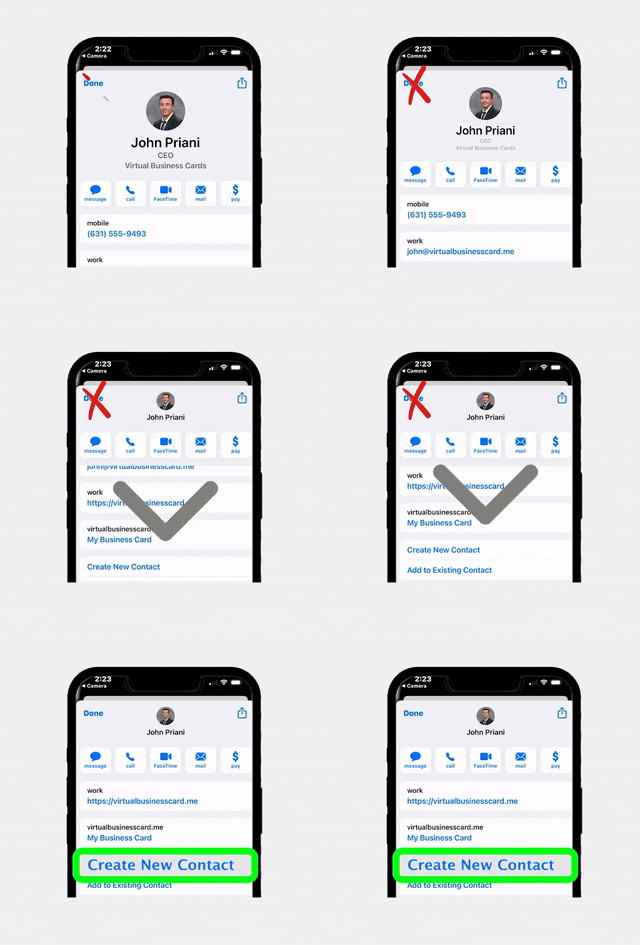
An NFC business card contains a small, thin chip embedded in the card itself. When someone taps their smartphone against the card, the chip transmits data to the phone instantly. There is no app required for the recipient, no QR code to scan, and no manual typing involved. The phone simply receives the information and prompts the user to save the contact, visit a website, or view a digital profile.
For real estate professionals, the data transmitted can include your name, phone number, email address, brokerage information, website URL, social media profiles, and even links to your active listings. Some advanced solutions go further by offering fully customizable digital profiles that update in real time, meaning you never have to reorder cards when your information changes.
Why Realtors Are Switching to NFC Business Cards
The real estate industry has always been relationship-driven. According to the National Association of Realtors (NAR), 89% of buyers would use their agent again or recommend them to others. That means staying memorable and making it easy for people to reach you is critical to long-term success.
Traditional paper business cards have served agents well for decades, but they come with well-known limitations. They get lost, thrown away, or buried in a drawer. Studies suggest that approximately 88% of paper business cards are discarded within a week of being received. For an agent who hands out hundreds of cards at open houses, networking events, and community gatherings, that is a staggering amount of wasted opportunity.
NFC business cards solve several problems at once:
- Instant digital transfer – Contact details go directly into the recipient’s phone, eliminating the risk of a lost card.
- Always up to date – Change your phone number or brokerage? Update your digital profile once and every future tap reflects the new info.
- Professional impression – Tapping a sleek card to share your information signals that you are tech-savvy and forward-thinking.
- Eco-friendly – No more reprinting thousands of paper cards every time something changes.
- Lead tracking – Some NFC card platforms let you see when and how often your card was tapped, giving you valuable engagement data.
Key Features to Look For in NFC Business Cards for Realtors
Not all NFC business cards are created equal. As a real estate agent, your needs are different from a graphic designer or a software developer. Here are the features that matter most when evaluating NFC card solutions for the real estate industry.
Customizable Digital Profile
Your NFC card should link to a professional digital profile, not just a plain contact card. Look for solutions that let you add your headshot, brokerage logo, property listings, testimonials, and links to your MLS search page. A platform like RealConnect by RLTRsync is purpose-built for real estate professionals and offers this kind of tailored digital business card experience.
Real-Time Editing
Your information will change. Maybe you switch brokerages, earn a new designation, or update your headshot. The best NFC card solutions let you edit your profile in real time without needing to replace the physical card.
Lead Capture Integration
The most valuable feature for any realtor is the ability to capture leads, not just give out your information. Some platforms allow two-way contact sharing, meaning you receive the other person’s contact details when they tap your card. This turns every handshake into a recorded lead.
Analytics and Tracking
How many people tapped your card this week? Which links did they click? Analytics help you understand which networking events and strategies are generating the most engagement so you can double down on what works.
Compatibility and Reliability
Make sure the NFC chip works consistently across both iOS and Android devices. The last thing you want is an awkward moment at a listing presentation when the tap does not register. Reputable NFC card providers thoroughly test compatibility across hundreds of device models.
NFC Business Cards vs. Traditional Paper Cards: A Detailed Comparison
To truly answer whether NFC business cards are worth it for realtors, it helps to see a side-by-side comparison across the factors that matter most to real estate professionals.
Cost
A standard order of 500 paper business cards typically costs between $20 and $100, depending on the quality and design. That sounds affordable until you factor in reprints for information changes, design updates, and the sheer volume agents go through each year. An NFC card typically costs between $15 and $50 as a one-time purchase, plus a small monthly or annual subscription for the digital profile platform. Over a two to three year period, NFC cards almost always cost less.
Effectiveness
Paper cards rely on the recipient taking action, finding the card later, and manually entering your details into their phone. NFC cards bypass all of that friction. One tap and your details are saved. According to Inman News, agents who adopt digital-first tools consistently report higher engagement rates and faster lead response times.
Environmental Impact
The real estate industry is increasingly aware of sustainability. Approximately 10 billion paper business cards are printed each year in the United States, and a significant portion end up in landfills. One NFC card replaces thousands of paper cards over its lifetime, which resonates with environmentally conscious clients.
Flexibility
Paper cards are static. Once printed, the information cannot change. NFC cards link to dynamic digital profiles that can be updated instantly. This is especially valuable for agents who frequently update their listing portfolios, add new certifications, or join a new team.
Professionalism
Both options can look professional when done well. However, the wow factor of tapping a card and having your full digital profile appear on a client’s phone is hard to replicate with paper. It positions you as a modern, tech-forward agent, which is particularly appealing to millennial and Gen Z homebuyers who now represent the largest segment of the market, according to the NAR Generational Trends Report.
How NFC Business Cards Improve Lead Capture and Follow-Up
For real estate agents, the ultimate measure of any tool is whether it helps you win more clients. NFC business cards for realtors shine brightest in the area of lead capture and follow-up, two activities that directly impact your bottom line.
Eliminating the Data Entry Bottleneck
Think about a busy open house where you meet 30 potential buyers in a single afternoon. With paper cards, you hand one to each visitor and hope they reach out. With a paper sign-in sheet, you struggle to read handwriting later. With an NFC-enabled digital card, a quick tap saves your full contact profile to their phone instantly. Pair this with a digital sign-in tool like EntryPointPro for your open house registration, and you have captured lead information from both directions.
Two-Way Contact Exchange
The best NFC card platforms do not just push your information to the other person. They also prompt the recipient to share their details back to you. This creates an instant two-way exchange that populates your CRM with the lead’s name, phone number, and email, all without a single form or clipboard.
Speed to Lead
Research consistently shows that the first agent to respond to a lead has a dramatically higher chance of winning the client. When your NFC card captures a lead’s contact details in real time, you can follow up within minutes rather than waiting days to manually enter information from a stack of paper cards.
Tracking Engagement
Advanced NFC card platforms provide analytics dashboards that show you how many people viewed your profile, which links they clicked, and how often they returned. This intelligence helps you prioritize your follow-up efforts. If someone viewed your profile three times in two days, that is a hot lead worth calling immediately.
Common Concerns About NFC Business Cards (and the Truth)
Despite the clear advantages, some agents hesitate to adopt NFC business cards. Let us address the most common concerns head on.
“My Clients Are Not Tech-Savvy Enough”
This is the most frequent objection, and it is increasingly outdated. NFC requires zero technical knowledge from the recipient. They simply hold their phone near the card, and a notification pops up. There is no app to download, no QR code to scan, and no instructions to follow. If your client can use a smartphone, they can use your NFC card.
“They Are Too Expensive”
As we covered earlier, the total cost of ownership for NFC cards is actually lower than paper cards for most active agents. When you factor in reprinting costs, design fees, and the value of captured leads that would have otherwise been lost, NFC cards pay for themselves quickly. Many platforms, including RLTRsync’s affordable plans, offer accessible pricing tiers for individual agents and teams alike.
“What If the Technology Fails?”
NFC chips are passive, meaning they require no battery and have no moving parts. They are built to last for years without degradation. The failure rate is extremely low. As an extra precaution, most NFC cards also include a QR code on the back, so you always have a backup method for sharing your profile.
“I Will Still Need Paper Cards for Some Situations”
This is actually a fair point, and the answer is simple: you can use both. Many agents keep a small stack of paper cards for situations where they want to leave behind a physical reminder, such as tucking a card into a listing packet. But for face-to-face networking, which is where the highest-value connections happen, the NFC card is the superior tool.
“I Am Not Sure Where to Start”
Getting set up with NFC business cards is surprisingly simple. Platforms designed specifically for the real estate industry, like RealConnect, handle the entire setup process. You create your digital profile online, order your NFC-enabled card, and you are ready to start tapping within days.
How to Get Started with NFC Business Cards for Your Real Estate Business
If you have read this far and decided that NFC business cards are worth exploring, here is a practical roadmap to get started.
Step 1: Choose the Right Platform
Not every NFC card provider understands the unique needs of real estate agents. Look for a platform that offers real estate-specific templates, listing integration, lead capture, and analytics. Generic NFC card services might give you a basic digital contact card, but they will not help you showcase properties or capture buyer leads.
Step 2: Build a Compelling Digital Profile
Your NFC card is only as effective as the profile it links to. Invest time in creating a polished digital profile that includes a professional headshot, your value proposition, contact details, social media links, client testimonials, and links to your active listings. Think of it as a mini website that lives on your business card.
Step 3: Order Your Card
Most NFC card platforms offer a range of card materials, from PVC plastic to metal to bamboo. Choose a material that aligns with your personal brand. Metal cards tend to make the strongest impression, while eco-friendly materials like bamboo appeal to sustainability-minded clients.
Step 4: Practice Your Pitch
The first few times you use your NFC card, you will want to have a smooth, natural way to introduce it. Something as simple as, “Let me tap my card to your phone so you have all my info” works perfectly. Most people are intrigued by the technology and will remember the interaction.
Step 5: Integrate with Your Existing Tools
For maximum impact, connect your NFC card platform with your CRM, email marketing system, and other tools you already use. This ensures that every lead captured through your card automatically enters your follow-up pipeline. If you are already using RLTRsync’s suite of real estate tools, the integration is seamless.
Step 6: Leverage NFC at Open Houses and Events
Open houses are one of the best places to use NFC business cards. Instead of just handing visitors a paper flyer, offer a quick tap to share your full digital profile including the property details. Combined with a digital sign-in system like EntryPointPro, you create a fully digital, professional experience that sets you apart from competing agents.
Frequently Asked Questions
Do NFC business cards work with all smartphones?
NFC business cards work with the vast majority of modern smartphones. All iPhones from the iPhone 7 onward support NFC reading natively, and most Android phones manufactured after 2015 also include NFC capability. For the small percentage of older devices without NFC, most cards include a QR code as a backup, ensuring you are always covered.
How much do NFC business cards cost compared to paper cards?
A single NFC business card typically costs between $15 and $50 as a one-time purchase, with optional monthly or annual platform subscriptions ranging from $5 to $20 per month. While the upfront cost is higher than a box of paper cards, you only need one NFC card, and it replaces thousands of paper cards over its lifetime. Most agents find that NFC cards are more cost-effective within the first year.
Can I update my NFC business card information after I receive it?
Yes, and this is one of the biggest advantages of NFC business cards for realtors. The NFC chip links to a digital profile hosted online. You can update your name, phone number, email, listings, photos, and any other information at any time without replacing the physical card. Changes take effect immediately for anyone who taps your card.
Are NFC business cards secure?
NFC business cards are very secure. The chip only transmits when a device is held within a few centimeters of the card, making unauthorized scanning virtually impossible in normal situations. The data transmitted is typically a URL to your digital profile, which you control. No sensitive personal data is stored on the chip itself.
Can I use NFC business cards alongside traditional paper cards?
Absolutely. Many successful real estate agents use a hybrid approach. They carry their NFC card for in-person networking and meetings where they want to make a tech-savvy impression and capture leads digitally. They keep a small supply of paper cards for situations like leaving a card in a listing packet or dropping one off at a local business. The two formats complement each other well.
Ready to Upgrade Your Real Estate Networking?
RealConnect by RLTRsync gives you a professional digital business card designed specifically for real estate agents, complete with NFC capability, lead capture, and seamless integration with your existing workflow.






 Icon On The Top Right Is the Menu For Your Card. This Is Where You can edit your card and log into your dashboard.