A well-crafted pre-listing packet can be the difference between walking into a listing appointment as just another agent and walking in as the clear frontrunner. Before you ever shake hands with a potential seller, this carefully assembled collection of materials tells your story, demonstrates your expertise, and builds trust in ways that a phone call or email simply cannot. In a market where sellers often interview multiple agents, your pre-listing packet is your silent salesperson, working on your behalf long before you arrive at the door.
What Is a Pre-Listing Packet?
A pre-listing packet is a professionally designed collection of documents, data, and marketing materials that you send to prospective sellers before your listing presentation. Think of it as your professional portfolio combined with a roadmap for the home selling process. It typically arrives in the seller’s hands a few days before your scheduled meeting, giving them time to review your credentials, understand your approach, and come to the appointment already leaning in your direction.
Unlike a listing presentation, which you deliver in person, the pre-listing packet does its work independently. It needs to be clear, visually appealing, and packed with value, all without the benefit of your personality and verbal explanations to fill in the gaps. The best packets anticipate seller questions and answer them proactively, positioning you as the knowledgeable, prepared professional they want handling the largest financial transaction of their lives.
According to the National Association of Realtors, 73% of homeowners only interview one agent before listing their home. That means if you get the appointment, you are already in a strong position. A powerful pre-listing packet helps ensure you convert that opportunity into a signed listing agreement.
Why Pre-Listing Packets Matter More Than Ever
Today’s sellers are more informed, more skeptical, and more comparison-oriented than at any point in real estate history. They research agents online, read reviews, and come to listing appointments with high expectations. A pre-listing packet addresses this reality head-on by giving sellers exactly what they are looking for: proof that you are the right agent for the job.
Here are several reasons why pre-listing packets have become essential for top-producing agents:
- They set the agenda. By providing information in advance, you control the narrative. Sellers come to the meeting thinking about your strengths rather than their objections.
- They demonstrate professionalism. In a field where many agents show up with nothing more than a business card and a CMA printout, a polished packet signals that you operate at a higher level.
- They reduce appointment anxiety. Sellers feel more comfortable when they know what to expect. Your packet outlines the process, so they feel prepared and at ease.
- They differentiate you from the competition. If a seller is interviewing three agents and only one sends a comprehensive pre-listing packet, that agent immediately stands out.
- They shorten the listing presentation. When sellers have already absorbed key information, your in-person meeting becomes a focused conversation rather than a lengthy monologue.
The shift toward digital communication has also made it easier than ever to deliver a pre-listing packet. You can send a beautifully designed PDF via email, share a custom landing page, or even create a short video walkthrough. The barrier to entry has dropped, which means there is no excuse not to have one.
Essential Components of a Winning Pre-Listing Packet
Not all pre-listing packets are created equal. The most effective ones follow a strategic structure that guides the seller through a logical journey, from introduction to action. Here is a breakdown of the core components every pre-listing packet should include:
- Cover letter or welcome message – A personalized note addressing the seller by name and expressing enthusiasm about their property.
- Agent biography and credentials – Your professional story, certifications, designations, and specializations.
- Market overview and comparable sales – Data-driven insights into their local market and recent comparable transactions.
- Pricing strategy explanation – Your philosophy on pricing and how you determine the optimal list price.
- Marketing plan – A detailed outline of how you will market their property, including photography, staging, online listings, social media, open houses, and more.
- Technology and tools – An overview of the platforms and technology you use to streamline the selling process.
- Client testimonials and case studies – Social proof from past clients that validates your claims.
- Timeline and process overview – A step-by-step guide to what the seller can expect from listing to closing.
- Contact information and next steps – Clear instructions on how to reach you and what will happen at the upcoming meeting.
Crafting a Compelling Agent Introduction
The agent introduction section of your pre-listing packet is where you make your first emotional connection with the seller. This is not the place for a dry resume. Instead, it should tell a story that resonates with the homeowner and makes them feel confident in your ability to represent their interests.
Start with a brief personal narrative. Why did you get into real estate? What drives you? What do you love about helping people sell their homes? Sellers want to work with someone they like and trust, so showing a bit of personality goes a long way.
Follow your personal story with your professional credentials. Include relevant statistics like your average days on market, list-to-sale price ratio, and total transaction volume. If you hold any designations such as CRS, ABR, or SRES, explain what they mean and why they matter to the seller.
Consider including a professional headshot and a brief video introduction. A short 60-second video where you speak directly to the seller, acknowledging their property and expressing your excitement about the opportunity, adds a personal touch that written words alone cannot achieve.
Your contact information should be easy to find and comprehensive. Include your phone number, email, website, and a link to your digital business card. Making it effortless for sellers to reach you signals accessibility and responsiveness, two qualities every seller values in their listing agent.
Market Analysis and Pricing Strategy
The market analysis section is often the most scrutinized part of your pre-listing packet. Sellers want to know what their home is worth, and they want to see the data that supports your opinion. This is where your expertise truly shines.
Start with a broad overview of the local market. Include key metrics like median sale price trends, average days on market, inventory levels, and absorption rates. Use charts and graphs to make the data visually digestible. A well-designed infographic can communicate complex market conditions far more effectively than a paragraph of text.
Next, drill down into comparable sales. Select three to five recent sales that are genuinely comparable to the seller’s property in terms of location, size, condition, and features. For each comparable, include the address, sale price, days on market, and any relevant notes about the property. Be transparent about adjustments you would make for differences between the comparable and the subject property.
Your pricing strategy explanation should address common seller concerns head-on. Many sellers want to price high and “see what happens.” Use data to show the relationship between initial list price and final sale price. Reference studies from sources like Inman News that demonstrate how overpriced listings often sell for less than homes priced correctly from the start.
Include a pricing spectrum or range rather than a single number in your pre-listing packet. This approach shows sellers that you understand pricing is nuanced and gives you room to discuss strategy in person. Present scenarios that show what might happen at different price points, including expected buyer interest levels and probable time on market.
Your Marketing Plan and Technology Tools
Sellers want to know exactly how you plan to find a buyer for their home. Your marketing plan section should be detailed, specific, and visually compelling. Vague promises like “I will market your home aggressively” mean nothing without specifics to back them up.
Break your marketing plan into clear categories:
- Professional Photography and Media: Explain that you hire professional photographers, offer virtual tours, drone footage, and twilight photography when appropriate. Include sample images from past listings to show the quality of your visual marketing.
- Online Marketing: Detail the websites where their listing will appear. Discuss your social media strategy, including targeted ads on Facebook and Instagram. Mention your email marketing to your buyer database.
- Open Houses: Describe your open house strategy, including how you capture and follow up with every visitor. If you use tools like EntryPointPro for digital sign-in and automated lead capture at open houses, highlight how this technology ensures no potential buyer falls through the cracks.
- Print Marketing: Include examples of property brochures, just-listed postcards, and neighborhood mailers that you produce for your listings.
- Agent Networking: Explain how you leverage your professional network, including broker open houses and agent-to-agent marketing, to generate buyer interest.
The technology section of your pre-listing packet is increasingly important. Today’s sellers expect their agent to be tech-savvy. Highlight the platforms and tools you use to streamline the selling process. For example, if you use a dedicated offer management platform to organize and present multiple offers, explain how this benefits the seller by creating transparency and potentially driving up the final sale price through structured competition.
Mention any communication tools you use to keep sellers informed throughout the process. Whether it is a weekly email report, a shared dashboard, or regular text updates, sellers want to know they will not be left in the dark once they sign the listing agreement.
Social Proof, Testimonials, and Results
No matter how impressive your marketing plan sounds, sellers ultimately want proof that your approach works. Social proof is one of the most persuasive elements of any pre-listing packet, and it deserves a dedicated section.
Start by curating five to eight of your strongest client testimonials. Choose testimonials that are specific rather than generic. A review that says “Great agent, highly recommend” is far less impactful than one that says “Sarah sold our home in 7 days for $15,000 over asking price. Her staging recommendations and pricing strategy were spot on.” Specific results and details make testimonials believable and relatable.
If possible, organize your testimonials to match the seller’s situation. If the prospective seller has a luxury property, lead with testimonials from luxury sellers. If they are downsizing, include reviews from clients who went through a similar transition. This tailored approach shows sellers that you have relevant experience.
Beyond written testimonials, consider including brief case studies of notable sales. For each case study, outline the challenge, your strategy, and the result. For example:
- Challenge: A four-bedroom home sat on the market for 90 days with a previous agent and received no offers.
- Strategy: Repriced based on updated comps, invested in professional staging and photography, and launched a targeted social media campaign.
- Result: Received three offers within 10 days and sold for 98% of the new list price.
Include your production statistics as well. Total homes sold, average days on market, list-to-sale price ratio, and total sales volume all serve as quantifiable evidence of your track record. According to HousingWire, sellers consistently rank agent experience and proven results as top factors in their selection process.
If you have any awards, media features, or industry recognition, include them in this section. These third-party endorsements carry additional weight because they come from sources outside your control.
Digital vs. Physical Pre-Listing Packets
One of the most common questions agents ask is whether to send a digital or physical pre-listing packet. The answer depends on your market, your brand, and your target clientele. Both formats have distinct advantages.
Digital Pre-Listing Packets
Digital packets are fast, cost-effective, and easy to update. You can send a beautifully designed PDF via email within minutes of scheduling a listing appointment. Digital formats also allow you to embed video content, include clickable links to your website and online reviews, and track whether the seller has opened the document.
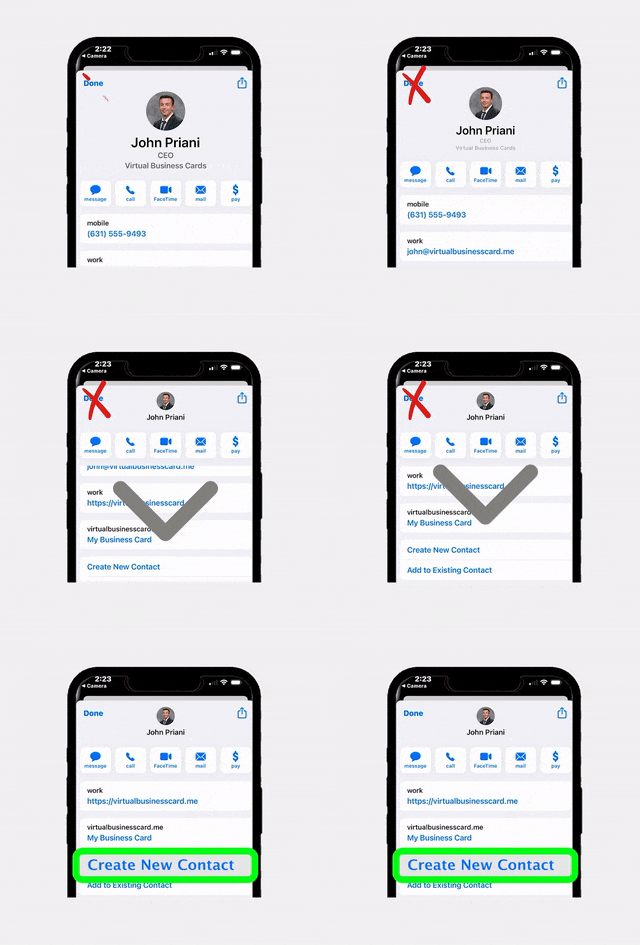
For tech-forward markets and younger sellers, a digital pre-listing packet may feel more modern and aligned with their communication preferences. You can also create a personalized landing page for each seller, complete with their property address and customized content. Pair your digital packet with your RealConnect digital business card so sellers can save your contact information to their phone with a single tap.
Physical Pre-Listing Packets
Physical packets have a tactile quality that digital versions cannot replicate. A professionally printed booklet in a branded folder, delivered to the seller’s doorstep, makes a powerful impression. It sits on their kitchen counter or coffee table, serving as a constant reminder of your professionalism.
For luxury listings or older demographics, a physical packet may carry more weight. The investment in printing and delivery signals that you are willing to invest in their listing at a level that other agents are not.
The Hybrid Approach
Many top agents use a hybrid approach. They send a digital version immediately after scheduling the appointment, then follow up with a printed version delivered to the seller’s door a day or two before the meeting. This strategy maximizes both speed and impact.
Regardless of format, the design quality matters. Use consistent branding, high-quality images, and clean layouts. Avoid cluttered pages or walls of text. White space is your friend. If design is not your strength, invest in a professional template or hire a graphic designer to create a reusable framework.
As you build out your systems and refine your pre-listing packet over time, remember that the goal is not perfection on day one. Start with the essential components, gather feedback from sellers, and continuously improve. The agents who consistently win listings are the ones who treat their pre-listing packet as a living document that evolves with their business.
Your pre-listing packet is ultimately a reflection of the experience sellers can expect when working with you. If it is organized, professional, data-driven, and personal, sellers will assume that your service as their listing agent will be exactly the same. And in most cases, that assumption alone is enough to win the listing before you even walk through the door.
Frequently Asked Questions
How far in advance should I send my pre-listing packet?
Ideally, send your pre-listing packet two to three days before your listing appointment. This gives the seller enough time to review the materials thoroughly without so much time that they lose momentum or interest. If you are using the hybrid approach, send the digital version immediately after scheduling and deliver the physical version one to two days before the meeting.
How long should a pre-listing packet be?
A pre-listing packet should typically be 10 to 20 pages. It needs to be comprehensive enough to demonstrate your expertise but concise enough that a busy homeowner will actually read it. Focus on quality over quantity. Every page should add value and move the seller closer to choosing you as their agent.
Should I include my commission rate in the pre-listing packet?
Most experienced agents recommend against including specific commission rates in the pre-listing packet. Commission is a conversation best had in person where you can explain your value proposition and address questions directly. Your packet should focus on demonstrating the value and services you provide, which naturally supports your fee structure when discussed at the meeting.
Can I use the same pre-listing packet for every seller?
While you should have a core template that remains consistent, every pre-listing packet should be personalized for the specific seller and property. Customize the cover letter, comparable sales, and relevant testimonials to match their situation. Sellers can tell the difference between a generic mass-produced document and one that was created with their needs in mind.
What is the biggest mistake agents make with pre-listing packets?
The most common mistake is making the packet entirely about the agent rather than the seller. While your credentials matter, the packet should be framed around how your experience, tools, and strategy will benefit the seller specifically. Lead with their needs and position your qualifications as the solution to their concerns about selling their home.
Elevate Your Real Estate Business with Smarter Technology
From digital open house sign-ins to streamlined offer management and professional digital business cards, RLTRsync gives you the tools to impress sellers at every stage of the transaction.






 Icon On The Top Right Is the Menu For Your Card. This Is Where You can edit your card and log into your dashboard.