Getting buyers through the door has never been more competitive. With shifting market conditions and more agents vying for attention in every neighborhood, your open house marketing ideas need to evolve well beyond yard signs and flyer boxes. In 2026, the agents who consistently pack their open houses are the ones combining creative offline strategies with powerful digital tools that capture leads, build anticipation, and convert curious visitors into serious buyers. This guide walks you through the most effective tactics working right now so you can turn every open house into a lead-generating event.
Why Traditional Open House Marketing Falls Short in 2026
For decades, real estate agents relied on a predictable formula: place a few directional signs around the neighborhood, post a listing on the MLS, and hope the right buyers happened to drive by on a Sunday afternoon. While these methods still have a supporting role, they are no longer sufficient to generate meaningful foot traffic on their own.
According to the National Association of Realtors’ Profile of Home Buyers and Sellers, over 95% of buyers use online tools during their home search. That means if your open house marketing strategy starts and ends in the physical world, you are missing the vast majority of potential attendees before they even know your event exists.
The agents seeing the best results in 2026 are blending traditional neighborhood outreach with digital-first strategies that meet buyers where they already spend their time, on their phones, in their social feeds, and in their email inboxes. The good news is that adopting these strategies does not require a massive budget. It requires a shift in mindset and the right set of tools.
Leverage Social Media to Build Pre-Event Buzz
Social media is the single most powerful free channel for promoting open houses, and most agents still dramatically underutilize it. The key is not just announcing the open house but creating a content arc that builds anticipation over several days.
The Five-Day Content Arc
Start promoting your open house at least five days before the event. Here is a framework that consistently drives engagement:
- Day 1, Teaser post: Share a single eye-catching photo of the property with a caption like “Something special is coming to [Neighborhood] this weekend. Stay tuned.” This creates curiosity without giving everything away.
- Day 2, Feature highlight: Post a short video walkthrough of one standout feature, like the kitchen, backyard, or a recent renovation. Use Reels or TikTok for maximum reach.
- Day 3, Neighborhood spotlight: Share what makes the area great. Walk scores, nearby restaurants, school ratings, and park access. Buyers purchase neighborhoods just as much as they purchase homes.
- Day 4, Event details: Post the full details with date, time, address, and a clear call to action. Include a link to your event page or registration form.
- Day 5, Day-of reminder: Go live or post a Story from inside the property as you set up. This creates urgency and FOMO (fear of missing out).
Paid Social Ads on a Small Budget
Even $25 to $50 in targeted Facebook or Instagram ads can dramatically expand your reach. Use geographic targeting to show your open house ad to users within a 5 to 10 mile radius of the property. Layer on interest-based targeting such as “first-time homebuyer” or “real estate investing” to reach the most relevant audience.
Leverage Video Content
Video consistently outperforms static images on every social platform. You do not need professional equipment. A well-lit smartphone walkthrough with genuine enthusiasm and helpful commentary about the home’s features can outperform a polished production video because it feels authentic and relatable. According to Inman News, listings with video content receive over 400% more inquiries than those without.
Use QR Code Sign-In Technology to Capture Every Lead
One of the most overlooked open house marketing ideas is optimizing what happens when visitors actually arrive. The old paper sign-in sheet is a liability. Visitors write illegible names, skip fields, or provide fake contact information because they feel put on the spot. You lose leads before you ever have a chance to follow up.
In 2026, the standard for professional open houses is digital sign-in. Platforms like EntryPointPro let visitors check in using a simple QR code scan on their own phone. The experience is fast and friction-free, which means higher completion rates and accurate contact data for every single visitor.
Why Digital Sign-In Matters for Marketing
Digital sign-in is not just about compliance and record-keeping, although those are critical benefits too. It directly powers your marketing in several ways:
- Accurate lead capture: Every visitor’s name, email, and phone number are captured digitally, eliminating guesswork and manual data entry.
- Automated follow-up: With accurate data flowing into your CRM, you can trigger automated emails and texts within minutes of a visitor leaving.
- Visitor analytics: Know exactly how many people attended, what time they came, and which properties generate the most interest across your portfolio.
- Compliance documentation: Automated document processing and storage help you meet brokerage and state requirements without extra work.
The data you collect at the open house becomes the fuel for every marketing and follow-up step that follows. Without clean, complete lead data, even the best open house marketing ideas lose their impact after the event ends.
Create an Immersive Visitor Experience That Keeps People Engaged
Getting visitors through the door is only half the battle. The other half is creating an experience memorable enough that attendees associate the home, and you, with positive emotions. The best open house marketing ideas extend into the event itself.
Stage With Intention
Professional staging is ideal, but not always in the budget. At minimum, ensure the home is spotlessly clean, well-lit, and lightly staged with fresh flowers, neutral decor, and inviting scents. Remove personal items that make it hard for visitors to envision themselves living there.
Offer Refreshments and Comfort
This may seem simple, but a small refreshment station with coffee, bottled water, and light snacks accomplishes two things. First, it signals professionalism and hospitality. Second, it encourages visitors to linger, which gives you more time to have meaningful conversations.
Create Interactive Touchpoints
Consider adding interactive elements that make your open house stand out from the dozens of others buyers attend:
- Neighborhood guide handouts: Create a one-page printed guide highlighting local restaurants, schools, parks, and commute times. Visitors take these home and remember your event.
- Property highlight cards: Place small cards in each room noting key features like “Quartz countertops installed 2025” or “New HVAC system, 10-year warranty.” This saves visitors from having to ask and ensures they do not miss important selling points.
- Virtual tour station: Set up a tablet showing a 3D virtual tour or floor plan so visitors can revisit rooms they have already walked through or explore spaces they may have missed.
Live Demonstrations
If the property has smart home features, do not just mention them. Demonstrate them. Show visitors how the smart thermostat works, how the security cameras connect to a phone app, or how the automated blinds operate. Experiential marketing creates stronger emotional connections than passive viewing.
Partner With Local Businesses for Cross-Promotion
One of the most underrated open house marketing ideas is partnering with local businesses to expand your reach into audiences you would never access on your own. This strategy works because it is mutually beneficial, costs little or nothing, and adds genuine value for open house visitors.
How Cross-Promotion Works
Identify two or three businesses near the listing that align with the homebuyer demographic. Think local coffee shops, bakeries, florists, home decor stores, or family-friendly restaurants. Approach them with a simple pitch:
- You will feature their business at your open house by offering their products as refreshments or displaying their flyers and business cards.
- In return, they promote your open house to their customers via their own social media, in-store signage, or email newsletter.
For example, a partnership with a local bakery might mean serving their branded pastries at your open house while the bakery posts about the event on their Instagram page. Both parties gain exposure to new audiences at zero advertising cost.
Co-Branded Event Marketing
Take it a step further by co-hosting themed events. A “Coffee and Keys” open house with a local roaster or a “Wine and Walkthrough” evening showing with a nearby wine shop creates a unique experience that generates social media buzz and word-of-mouth referrals organically.
Network Smarter With Digital Business Cards
Every person who walks into your open house is a potential client, referral source, or future listing lead. The way you exchange contact information matters more than most agents realize. Handing out paper business cards that end up crumpled in a pocket or lost in a purse is an outdated approach that rarely converts.
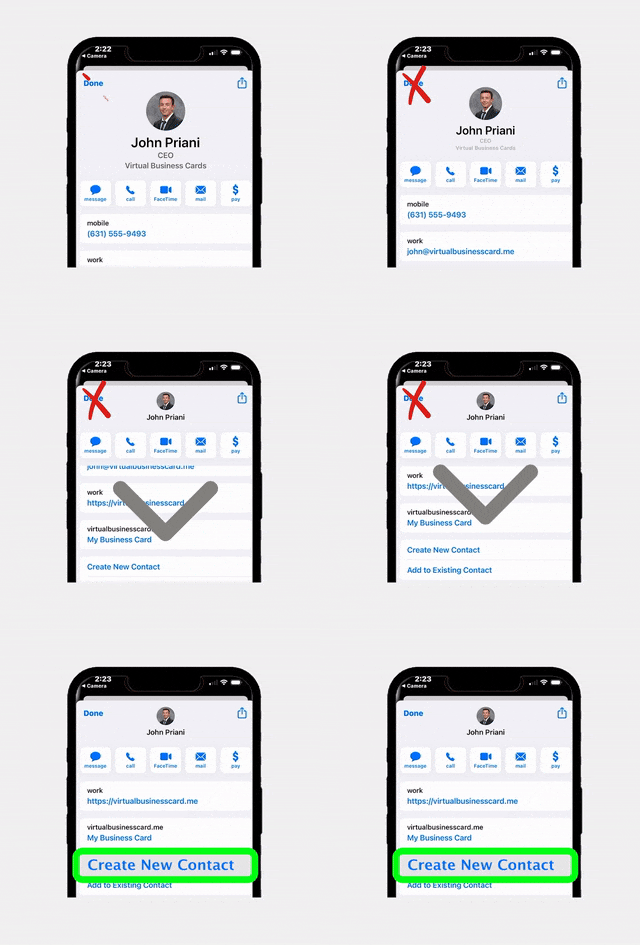
Digital business cards, like RealConnect by RLTRsync, let you share your complete contact information, social profiles, and website links with a single tap or scan. The recipient saves your details directly to their phone, which means your information lives in their contacts instead of their trash can.
Why This Matters at Open Houses
At a busy open house, you might meet 20, 30, or even 50 people in a few hours. You cannot have a deep conversation with every one of them. A digital business card ensures that even brief interactions result in a saved contact, making it easy for visitors to reach out later when they are ready to take the next step.
Digital cards also project a tech-savvy, professional image that resonates with today’s buyers, especially younger demographics who are entering the market in growing numbers.
Follow Up Faster Than the Competition
According to research from the National Association of Realtors, the speed of your follow-up is one of the most significant factors in converting leads. The agent who reaches out first after an open house has a dramatically higher chance of earning the client’s business.
The Golden Window: Within One Hour
Aim to send a personalized follow-up message within one hour of the open house ending. This does not mean a generic “Thanks for coming!” blast. The most effective follow-ups reference something specific about the visitor’s experience or stated needs.
If you used a digital sign-in platform like EntryPointPro, your visitor data is already organized and ready to use the moment the open house wraps up. There is no stack of paper to decipher and manually enter into your CRM. This speed advantage alone can set you apart from 90% of competing agents.
A Three-Touch Follow-Up Sequence
Do not rely on a single follow-up message. Build a short sequence that keeps you top of mind without being pushy:
- Same day (within one hour): Send a personalized text or email thanking them for visiting and asking if they have any questions about the property.
- Day two: Share a piece of value, such as a comparable market analysis for the neighborhood, a link to similar listings, or a neighborhood guide.
- Day five to seven: Check in one more time. If they are not interested in that specific property, ask if you can help them find something that fits their criteria better.
Connecting Follow-Up to Offer Management
When a visitor expresses serious interest, you need to transition smoothly from marketing mode to transaction mode. Having a streamlined offer management system in place means you can guide a motivated buyer from open house visit to submitted offer quickly and professionally, without the chaos of scattered emails and missed documents.
Track Your Results and Optimize for Future Open Houses
The final piece of the puzzle is treating each open house as a learning opportunity. Without tracking key metrics, you are guessing about what works rather than making data-driven decisions.
Key Metrics to Track
- Total visitors: How many people physically attended? Digital sign-in gives you an exact count rather than an estimate.
- Lead capture rate: Of all visitors, how many provided complete and accurate contact information?
- Marketing channel performance: Ask visitors how they heard about the open house. Was it social media, a yard sign, a neighbor referral, or an online listing? Track this over time to identify your highest-performing channels.
- Follow-up response rate: What percentage of visitors responded to your follow-up messages?
- Conversion rate: How many open house visitors ultimately became clients, either for that listing or another one?
Build a Repeatable System
The most successful agents do not reinvent the wheel for every open house. They build repeatable systems with templates, checklists, and workflows that ensure consistent quality and results. Your open house marketing ideas become more powerful when you can test, measure, and refine them over time.
Create a simple spreadsheet or use your CRM to log the metrics above for every open house. After ten or more events, you will have clear data showing which strategies drive the most traffic and the highest quality leads. Double down on what works and cut what does not.
Industry resources like HousingWire regularly publish market trend analyses and agent productivity studies that can help you benchmark your performance against broader industry data.
Frequently Asked Questions
What are the most effective open house marketing ideas for new agents?
New agents should focus on strategies with high impact and low cost. Start by building a social media content arc five days before each open house, use digital sign-in tools like EntryPointPro to capture accurate lead data, and partner with local businesses for cross-promotion. These tactics require more effort than money, and they build your brand and database simultaneously.
How far in advance should I start marketing an open house?
Begin your marketing at least five to seven days before the event for best results. This gives you time to build anticipation on social media, run targeted ads, distribute digital invitations to your database, and coordinate any local business partnerships. For high-profile listings, consider starting two weeks out with a pre-marketing teaser campaign.
Are paper sign-in sheets still acceptable at open houses?
While paper sign-in sheets are technically still used by some agents, they result in significantly lower lead capture quality due to illegible handwriting, incomplete entries, and fake information. Digital sign-in platforms provide accurate data, better compliance documentation, and faster follow-up capabilities, making them the clear standard for professional agents in 2026.
How much should I spend on paid advertising for an open house?
You can see meaningful results with as little as $25 to $50 per open house on Facebook or Instagram ads with geographic targeting. For luxury properties or high-priority listings, budgets of $100 to $200 can expand your reach significantly. The key is tight geographic and demographic targeting to ensure your ad spend reaches relevant potential buyers rather than a broad, unfocused audience.
What is the best way to follow up with open house visitors?
Send a personalized message within one hour of the event ending, referencing something specific about the visitor or their interests. Follow up again on day two with valuable content such as comparable listings or a neighborhood guide, and check in a final time around day five to seven. Digital sign-in tools ensure you have accurate contact data ready to use immediately after the event.
Ready to Transform Your Open House Results?
EntryPointPro gives you QR code sign-in, automated lead capture, and compliance tools designed specifically for real estate open houses. Start capturing every visitor and following up faster today.
 Icon On The Top Right Is the Menu For Your Card. This Is Where You can edit your card and log into your dashboard.