Your open house signage placement strategy can make or break the number of visitors who walk through the door. You could have the most beautifully staged listing in the neighborhood, but if potential buyers cannot find it, none of that preparation matters. Studies from the National Association of Realtors consistently show that yard signs and open house signs remain one of the top ways buyers discover homes for sale. Yet most agents treat signage as an afterthought, tossing a few directional arrows on the nearest corner and hoping for the best. In this guide, you will learn a systematic approach to open house signage that pulls walk-in traffic from every direction, keeps you compliant with local regulations, and integrates seamlessly with modern digital lead capture tools.
Why Strategic Sign Placement Matters More Than You Think
Many agents assume that online marketing has replaced the humble open house sign. The reality is very different. According to the NAR’s Profile of Home Buyers and Sellers, approximately 4% of buyers found the home they ultimately purchased through a yard sign, and an even larger percentage use signs as confirmation when driving to a home they found online. Walk-in traffic from open houses remains one of the most effective ways to capture unrepresented buyers, build your pipeline, and create urgency among competing offers.
Think about the buyer’s journey on a typical Saturday afternoon. A couple is driving through a neighborhood they are curious about. They have no appointment, no specific address in mind. They are casually exploring. Your open house signage is the only thing standing between their car rolling past and their feet stepping inside your listing. Every sign you place is a micro-conversion point, nudging that driver one step closer to your front door.
Beyond attracting buyers, strong signage also serves your listing client. Sellers notice when their agent puts effort into visibility. A well-executed sign route signals professionalism and commitment, which strengthens your relationship and often leads to referrals.
Mapping Your Sign Route: A Step-by-Step Approach
Before you load your signs into the car, you need a plan. Random sign placement wastes time and materials. A mapped route ensures you cover every major traffic artery feeding into the listing’s neighborhood.
Step 1: Identify the Major Traffic Arteries
Open a map app on your phone and zoom out far enough to see the two or three busiest roads near your listing. These are your primary feeder streets. Every car that might end up at your open house is currently traveling on one of these roads. Your first signs need to be visible from these arteries.
Step 2: Trace Every Turn a Driver Would Make
Starting from each major artery, trace the exact route a driver would take to reach the property. Count the turns. At every single turn, you need at least one directional sign. If there is no sign at a turn, you will lose the driver. It is that simple.
Step 3: Place Signs at Decision Points Before Turns
Do not place your sign right at the intersection. Place it 50 to 100 feet before the turn so the driver has time to read it, process it, slow down, and signal. A sign right at the corner forces drivers to make split-second decisions, and most will just keep going.
Step 4: Work Backward from the Property
Start at the listing and drive outward along each route, noting where you need signs. Then reverse the order when you actually place them, starting from the farthest point and working your way back. This way, you are placing signs in the same order that approaching drivers will encounter them.
Step 5: Account for Multiple Directions
Most agents only place signs along one route, typically the path they drive from their own office. But buyers come from all directions. If your listing is accessible from the north and the south on a main road, you need a sign route for each approach. Doubling your routes can easily double your walk-in traffic.
Types of Open House Signs and When to Use Each
Not all signs serve the same purpose. A good open house signage strategy uses different types of signs at different points along the route.
A-Frame Directional Signs
These are your workhorses. Sturdy, double-sided, and visible from both directions, A-frame signs belong at every turn along your route. Choose signs with bold, high-contrast text. The words “OPEN HOUSE” and an arrow should be readable from at least 50 feet away. Avoid cluttering them with your headshot, phone number, or brokerage logo at a size that competes with the directional information.
Yard Signs with Riders
Your main listing yard sign should have an “OPEN HOUSE TODAY” rider attached for the event. This confirms to visitors that they have arrived at the right property. It also captures the attention of neighbors who may know someone looking to buy in the area.
Feather Flags and Balloon Clusters
At the property itself, consider adding feather flags or balloon clusters to increase curb appeal and signal that something special is happening. These are especially effective on streets where the listing is set back from the road or where trees and parked cars might obscure the yard sign.
Large Intersection Signs
For the initial sign on a busy artery, consider a larger format sign or a sign with a balloon attached for extra visibility. This first sign is doing the hardest work: convincing a driver who was not planning to stop that they should divert from their route. It needs to stand out.
Placement Rules and Local Regulations You Need to Know
Open house signage is regulated at the local level, and rules vary dramatically from one city or county to the next. Ignoring these rules can result in fines, confiscated signs, and even complaints to your state real estate commission.
Common Restrictions to Research
- Public right-of-way rules: Many cities prohibit signs in the public right-of-way, which typically extends several feet from the curb. You may need to place signs on private property with the owner’s permission.
- Time restrictions: Some jurisdictions only allow open house signs during specific hours, often the duration of the open house plus a short setup and teardown window.
- Size limits: Maximum dimensions for temporary signs are common. A-frame signs are usually permitted, but oversized banners may not be.
- HOA rules: Homeowners associations often have their own signage restrictions that are even stricter than municipal codes. Check with the HOA before the event.
- State real estate commission requirements: Your state licensing board may require specific disclosures on all advertising, including open house signs. Check your state real estate commission’s guidelines to stay compliant.
Best Practices for Staying Compliant
Keep a simple checklist for each market area you serve. Document the rules once, and you will save time before every open house. Always pick up your signs immediately after the event. Leaving signs out overnight is one of the most common violations, and it annoys neighbors who might otherwise have been supportive of your efforts.
Maximizing Visibility at Key Intersections and Decision Points
Intersections are where you win or lose potential visitors. A driver approaching an intersection has a few seconds to notice your sign, read it, and decide to turn. Here is how to maximize your conversion rate at each one.
The Triangle Placement Technique
At a major intersection where traffic approaches from three or more directions, place signs in a triangle pattern. One sign faces northbound traffic, one faces eastbound, and one faces the turn itself. This ensures that no matter which direction a car is coming from, at least one sign is legible. This technique is especially powerful at T-intersections where traffic naturally slows.
Use Arrows, Not Addresses
On directional signs, arrows are far more effective than addresses. A driver cannot process “1247 Maple Lane” at 35 miles per hour, but they can instantly follow a bold arrow pointing left. Save the address for your online marketing. The job of street-level open house signage is simply to guide, not to inform.
Double-Stack for Two-Way Streets
On a two-way street where traffic flows in both directions, a single A-frame sign may only be readable from one side. Place two signs, one facing each direction, or position your A-frame sign perfectly perpendicular to the road so both panels are visible to oncoming traffic from either side.
Leverage Traffic Light Timing
Intersections with traffic lights are prime real estate for your signs. Stopped cars give drivers three to five seconds of idle time, enough to notice a sign, read it, and make a plan. Place your most impactful sign where it will be directly in the line of sight of stopped drivers.
Combining Physical Signage with Digital Lead Capture
Physical signs get people to the door, but what happens once they walk in? The most successful agents pair their signage strategy with a digital check-in system that captures every visitor’s contact information automatically.
Why Paper Sign-In Sheets Fall Short
Paper sign-in sheets have been the default for decades, but they create several problems. Visitors write illegible contact information, skip fields they do not want to fill out, or simply walk past the clipboard entirely. After the event, you are left trying to decipher handwriting and manually entering data into your CRM. Leads slip through the cracks, and your follow-up is delayed by hours or even days.
Digital Sign-In with QR Codes
A modern alternative is to use a digital sign-in platform like EntryPointPro, which lets visitors check in by scanning a QR code with their phone. The experience is fast, professional, and captures accurate contact data every time. You can even incorporate your QR code directly onto your physical open house signs, allowing curious passersby to register their interest without stepping inside.
This is where your signage strategy and your lead capture strategy converge. Imagine a driver who sees your sign at a busy intersection but cannot stop right then. If your sign includes a QR code or a short URL, that driver can still engage with your listing digitally, giving you a lead even if they never make it to the open house.
Automated Follow-Up and Compliance
Digital sign-in platforms also solve compliance challenges. Tools like EntryPointPro can present agency disclosures and required documents to visitors during the check-in process, ensuring you meet your state’s regulatory requirements without awkward clipboard conversations. And because the data is digital, your follow-up emails and texts can begin immediately, while the visitor is still emotionally engaged with the property.
Common Signage Mistakes That Cost You Walk-Ins
Even experienced agents make signage errors that quietly reduce their open house traffic. Here are the most common mistakes and how to avoid them.
Mistake 1: Not Enough Signs
The single biggest mistake is under-signing. Most agents use three to five signs. Top-producing agents routinely use 10 to 20 signs for a single open house, covering every approach from every direction. Signs are inexpensive compared to the value of a single new client relationship. Invest in a larger inventory.
Mistake 2: Signs That Are Too Cluttered
Your open house sign has about two seconds to communicate its message to a passing driver. If the sign is crowded with your photo, phone number, website, brokerage logo, and the property address, none of those elements will register. Keep it simple: “OPEN HOUSE” plus a directional arrow. That is all a directional sign needs to say.
Mistake 3: Placing Signs Too Late
Signs should be in place at least 30 to 45 minutes before the open house begins. Early arrivals are often your most motivated buyers. If your signs are not up yet, those buyers will drive right past.
Mistake 4: Ignoring Sign Condition
Faded, bent, or dirty signs reflect poorly on you and your listing. Replace worn signs regularly. A damaged sign suggests a careless agent, and that impression extends to how buyers perceive the listing itself.
Mistake 5: Forgetting to Pick Up Signs
Leaving signs out after the event is not only a potential code violation, it also trains neighbors and repeat visitors to ignore your signs in the future. If your signs are always out, they become invisible. Pick them up promptly so that when they appear next time, they signal a fresh, active event.
Mistake 6: No Signage for the Digital Age
As mentioned above, failing to include a QR code or digital check-in element on your signage means you are missing leads from people who see the sign but cannot attend. Even a simple mention of your digital business card or a scannable link can convert a curious driver into a real lead.
Advanced Strategy: Neighborhood Saturation and Repeat Events
Once you have mastered the basics, consider taking your open house signage strategy to the next level with neighborhood saturation techniques.
Host Consecutive Open Houses
Holding open houses on consecutive weekends in the same neighborhood builds recognition. By the second or third weekend, locals begin to associate your signs with activity in their area. This familiarity makes them more likely to stop in or refer friends and family.
Coordinate with Other Listings
If there are other open houses happening nearby on the same day, coordinate with those agents to create a neighborhood tour route. Shared directional signs that reference multiple open houses can attract more total traffic, benefiting everyone involved.
Use Signage to Promote Your Follow-Up
Consider adding a sign at the property exit that says “Loved this home? Let’s talk” along with a QR code linking to your contact information or a feedback form. This captures the emotional high point right as visitors are leaving, which is often when they are most receptive to engaging with an agent.
For a seamless way to share your contact details at any point during or after the open house, consider using a RealConnect digital business card that visitors can save directly to their phones. No paper cards lost in purses and pockets.
Frequently Asked Questions
How many open house signs do I need for a typical event?
Plan for a minimum of 10 to 15 directional signs for a single open house. You need at least one sign at every turn along each route from every major traffic artery feeding the neighborhood. Top-producing agents often use 20 or more signs, especially in areas with complex street layouts or multiple approach directions.
Where should I place open house signs for maximum visibility?
Place directional signs 50 to 100 feet before each turn so drivers have time to read, process, and react. Focus on intersections with traffic lights where cars stop, T-intersections where traffic naturally slows, and the entrances to the neighborhood from major roads. Always face the sign toward oncoming traffic.
Can I put open house signs on public sidewalks or medians?
It depends on your local municipality. Many cities restrict or prohibit signs in the public right-of-way. Check your city or county’s temporary sign ordinance before placing any signs. In restricted areas, you may need to get permission from private property owners to place signs on their land.
How do I capture leads from people who see my signs but do not attend?
Add a QR code to your directional signs that links to the property listing, a digital sign-in form, or your contact information. Tools like EntryPointPro make it easy to create scannable check-in codes. This way, even a driver who cannot stop can engage with you digitally and become a lead in your pipeline.
What is the best color combination for open house signs?
High-contrast color combinations are the most readable from a distance. White text on a dark blue or black background, or bold black text on a bright yellow or white background, tend to perform best. Avoid color combinations where the text and background have similar brightness levels, as they become unreadable in direct sunlight or from a moving vehicle.
Capture Every Open House Lead Automatically
Your signage gets visitors to the door. EntryPointPro makes sure you never lose their contact information. Digital QR code check-in, automated compliance documents, and instant follow-up, all in one platform built for real estate agents.





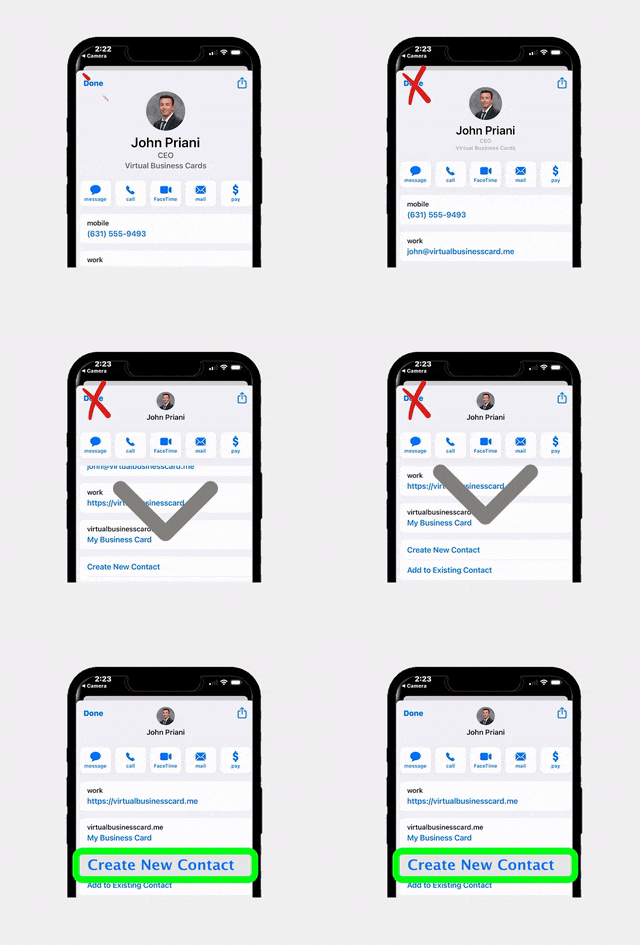
 Icon On The Top Right Is the Menu For Your Card. This Is Where You can edit your card and log into your dashboard.